

Please Leave Us A Message
Privacy statement: Your privacy is very important to Us. Our company promises not to disclose your personal information to any external company with out your explicit permission.


A rubber desiccant agent is a specialized moisture-absorbing compound integrated into rubber formulations to control humidity during the curing process. Unlike traditional additives that simply mix into the rubber matrix, desiccant agents actively capture and neutralize water vapor that could otherwise cause defects like blisters, voids, or incomplete vulcanization.
For manufacturers of automotive rubber sealing strips, EPDM components, and high-performance hoses, consistent moisture control translates directly to fewer rejected parts, lower scrap rates, and improved product longevity. Ningbo Actmix Rubber Chemicals Co., Ltd. has engineered pre-dispersed rubber chemicals with built-in desiccant capabilities to help you achieve this consistency at scale.
Our pre-dispersed masterbatch technology ensures that the desiccant agent is uniformly distributed throughout the rubber compound from the very first batch, eliminating the clumping and uneven dispersion that plagues traditional dry additive methods. This homogeneity is critical for maintaining tight quality tolerances in demanding applications such as rail traffic seals, automotive weatherstripping, and industrial shock absorbers.
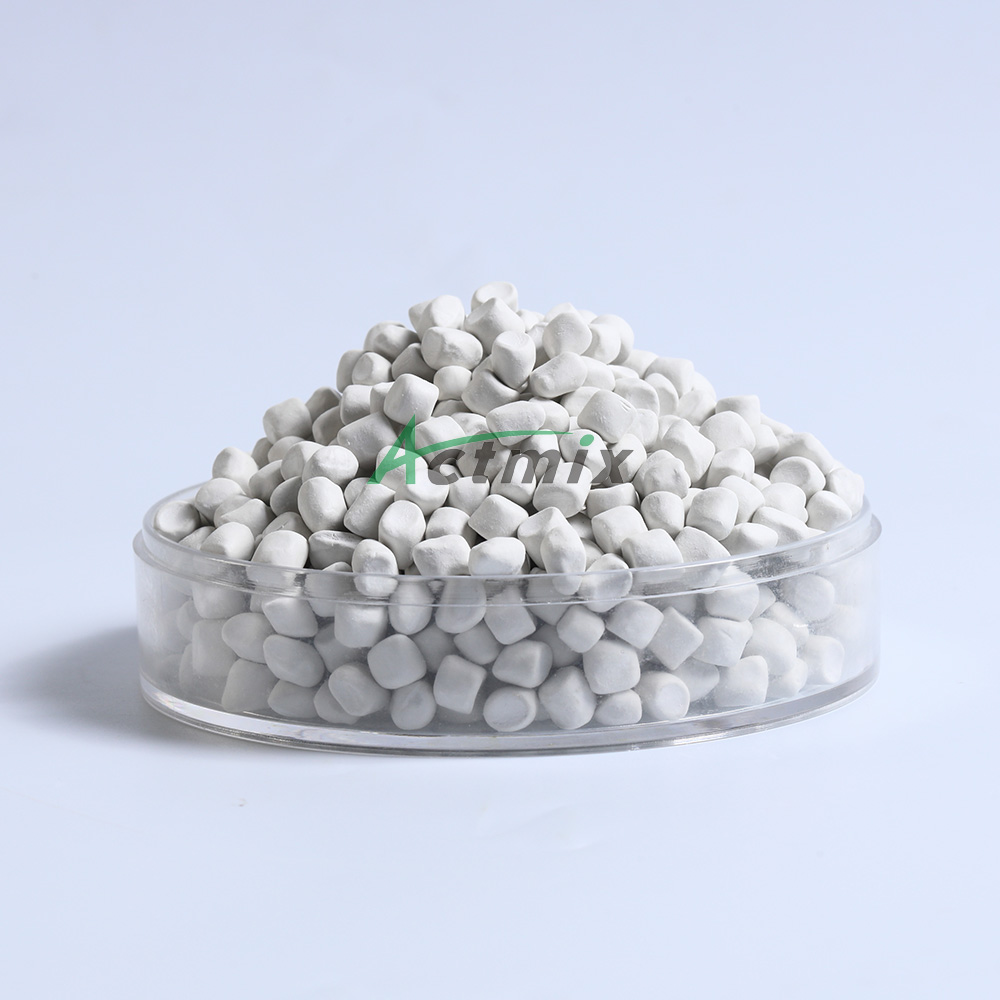
Our pre-dispersed masterbatch delivers uniform distribution of active ingredients, ensuring consistent moisture absorption across every production run. This eliminates batch-to-batch variation and reduces the risk of defective rubber components caused by uneven additive dispersion.
Actmix customizes the active content percentage and polymer binder type to match your specific rubber compound requirements. Whether you need low-moisture EPDM for automotive seals or high-capacity desiccant for industrial hoses, we engineer solutions tailored to your formulation parameters.
With an annual production capacity of 25,000 metric tons from our intelligent digital factory, Actmix guarantees reliable supply even for large-volume orders. Our IATF16949-certified facility ensures that quality standards are maintained consistently at any production scale.
Our products meet international standards including ISO14001 environmental management and ISO45001 occupational health and safety certifications. This compliance simplifies your procurement workflow when sourcing from China and reduces regulatory risk for exports to Europe, North America, and Southeast Asia.
Pre-dispersed masterbatch eliminates the need for complex dry additive handling, reducing dust exposure, improving worker safety, and streamlining your mixing process. The ready-to-use format integrates seamlessly into existing rubber processing equipment without requiring process modifications.
Actmix provides end-to-end technical assistance from formulation development through production optimization. Our engineering team helps you select the optimal desiccant agent configuration for your specific rubber type, curing conditions, and performance requirements.
Ningbo Actmix Rubber Chemicals Co., Ltd operates a modern, intelligent, and fully digital factory located in the Ningbo Jiangbei High-tech Park. Established in 2009, the company has grown into one of China's largest-scale manufacturers of pre-dispersed rubber chemicals and masterbatch products.
Our manufacturing facility produces hundreds of different pre-dispersed rubber chemical formulations, each rigorously tested for stability, dispersibility, and homogeneity. The digital factory infrastructure enables real-time monitoring of production parameters, ensuring that every batch of rubber desiccant agent meets exact specifications before shipment.
The company's commitment to quality is reflected in its triple certification achievement: IATF16949 for automotive-grade quality management, ISO14001 for environmental responsibility, and ISO45001 for workplace safety. These certifications provide buyers with confidence that Actmix products meet the stringent requirements of global automotive and industrial rubber markets.
Different rubber materials respond differently to desiccant agents. EPDM, nitrile rubber, silicone, and neoprene each have unique moisture sensitivity profiles and compatibility requirements with various polymer binders. Start by determining the base polymer system in your formulation to narrow down compatible desiccant configurations.
Assess how much residual moisture your curing process can tolerate before defects occur. Automotive sealing strips typically require extremely low moisture levels below 50ppm, while industrial hose compounds may accept higher thresholds. This tolerance level dictates the required active content percentage of the desiccant agent in your masterbatch.
Traditional dry desiccant powders often clump and disperse unevenly, creating weak spots in the final rubber product. Pre-dispersed masterbatch solutions solve this problem by embedding the desiccant agent within a compatible polymer carrier that melts and distributes uniformly during mixing. This approach significantly improves product consistency and reduces rejection rates.
Your curing temperature, pressure, and cycle time all influence which desiccant agent formulation will perform optimally. Higher curing temperatures may accelerate moisture release, requiring faster-acting desiccant chemistries. Work with your supplier to ensure the recommended product matches your specific vulcanization parameters.
Choose a manufacturer that offers customization rather than off-the-shelf standard products. A capable supplier like Actmix can adjust the active content range, select the optimal polymer binder for your rubber type, and provide technical data sheets with verified performance metrics. Ask for sample testing before committing to large orders.
If you import rubber chemicals from China, verify that the supplier has established export channels to your region. Actmix has successfully shipped to Europe, North and South America, Southeast Asia, and the Middle East, demonstrating familiarity with international logistics, documentation requirements, and regional regulatory standards.
Confirm IATF16949 certification if sourcing for automotive applications. This certification demonstrates adherence to automotive industry quality management standards and is often a prerequisite for supplier qualification.
Request technical data sheets for the specific desiccant agent formulation you are evaluating. Key parameters to verify include active content percentage, moisture absorption capacity, particle size distribution, and thermal stability range.
Order sample batches for trial production before committing to volume purchases. Test the pre-dispersed masterbatch in your actual mixing and curing processes to validate performance under real operating conditions.
Verify annual production capacity matches your order volume requirements. Suppliers with 25,000+ metric tons annual capacity, like Actmix, can reliably support large-scale procurement needs without supply chain disruptions.
Assess customization flexibility for active content and polymer binder selection. The ability to tailor formulations to your specific rubber compound ensures optimal performance and avoids unnecessary over-specification that increases landed cost.
Check export track record to your target market. Suppliers with proven experience shipping to Europe, North America, Southeast Asia, or the Middle East will understand regional regulatory requirements and documentation needs.
Evaluate lead time reliability and inventory management practices. Consistent on-time delivery prevents production line stoppages and helps you maintain lean inventory levels without risking stockouts.
Confirm environmental and safety certifications including ISO14001 and ISO45001. These certifications reduce your compliance risk and demonstrate the supplier's commitment to sustainable and safe manufacturing practices.
Actmix stands out as a leading Chinese manufacturer of pre-dispersed rubber chemicals and masterbatch products. With over a decade of experience since 2009, the company has built a reputation for delivering high-stability, high-dispersibility rubber additives to global markets.
Key advantages: Triple certification (IATF16949, ISO14001, ISO45001), 25,000 metric tons annual capacity, extensive export network spanning five continents, and comprehensive customization capabilities for active content and polymer binder selection.
Actmix's pre-dispersed rubber desiccant agents are specifically engineered for high-end applications including automotive sealing strips, rail traffic components, industrial hoses, shock absorbers, and tire manufacturing. Their intelligent digital factory ensures consistent quality across every production batch.
When comparing other potential suppliers, apply these evaluation criteria derived from Actmix's market position:
Certification portfolio: Verify IATF16949 for automotive-grade quality, plus ISO14001 and ISO45001 for environmental and safety compliance.
Production scale: Prioritize manufacturers with substantial annual capacity to ensure supply reliability for large-volume procurement.
Product range breadth: Suppliers offering hundreds of formulations demonstrate R&D capability and flexibility to address diverse rubber compound requirements.
Geographic reach: Established export operations indicate logistical competence and familiarity with international trade documentation and compliance.
EPDM rubber sealing strips for vehicle doors, windows, and trunk lids require precise moisture control during extrusion and vulcanization. Even minor moisture-related defects compromise weatherproofing and lead to warranty claims. Actmix pre-dispersed desiccant masterbatch ensures uniform moisture absorption, delivering defect-free sealing strips that meet OEM specifications.
Railway vehicle sealing systems demand exceptional durability and long-term performance under extreme environmental conditions. The high homogeneity of pre-dispersed rubber chemicals prevents premature degradation and maintains seal integrity over decades of service. Rail manufacturers specify Actmix products for their proven track record in transit applications.
Hydraulic, pneumatic, and fluid transfer hoses must withstand internal pressure without developing micro-voids or delamination layers caused by trapped moisture. Desiccant agents embedded in pre-dispersed form eliminate these failure points, extending hose service life and reducing unplanned maintenance downtime for industrial operations.
Automotive and industrial shock absorber seals operate under continuous dynamic stress and temperature cycling. Moisture contamination during manufacture creates weak points that fail prematurely under load. Actmix rubber desiccant solutions deliver the moisture control necessary to produce seals that maintain elasticity and sealing performance throughout their designed lifespan.
While tires represent only one segment of rubber chemical consumption, moisture control in sidewall compounds and inner liner materials is critical for preventing bulge formation and air retention issues. Pre-dispersed desiccant masterbatch integrates seamlessly into tire component manufacturing processes, supporting high-speed production lines without slowing throughput.
Beyond mainstream applications, Actmix pre-dispersed rubber chemicals serve niche markets including construction expansion joints, bridge bearings, vibration isolation mounts, and custom molded rubber components. Each application benefits from the consistent quality and customizable formulations that define Actmix's product portfolio.
A rubber desiccant agent is a moisture-absorbing additive incorporated into rubber compounds to capture and neutralize water vapor during the curing process. It works by chemically binding with free moisture molecules, preventing them from forming bubbles, blisters, or voids in the final vulcanized product. When pre-dispersed in a masterbatch format, the desiccant agent distributes uniformly throughout the rubber matrix, ensuring consistent performance across every production batch.
Pre-dispersed masterbatch solves three major problems associated with dry desiccant powders: uneven dispersion, dust generation, and inconsistent dosing. Dry powders tend to clump during mixing, creating localized pockets of high desiccant concentration alongside untreated areas. Masterbatch technology embeds the active ingredient in a compatible polymer carrier that melts and disperses homogeneously during rubber mixing. This results in uniform moisture absorption, cleaner working conditions, and more predictable production outcomes.
EPDM rubber is particularly sensitive to moisture during vulcanization and benefits significantly from desiccant agent incorporation. Other moisture-sensitive rubber types include nitrile rubber (NBR), silicone rubber, chloroprene rubber (neoprene), and ethylene propylene diene monomer compounds used in automotive seals, industrial hoses, and gasket applications. Any rubber formulation cured at elevated temperatures where moisture vaporization is likely to cause defects can benefit from desiccant agent use.
Actmix adjusts two key parameters to create customized desiccant agent formulations: active content percentage and polymer binder type. The active content determines the moisture absorption capacity per unit weight, while the polymer binder ensures compatibility with your specific rubber compound system. Our engineering team evaluates your base polymer, curing conditions, and performance requirements to recommend the optimal formulation that balances effectiveness with cost efficiency.
For automotive applications, verify IATF16949 certification, which is the globally recognized quality management standard for the automotive supply chain. Additionally, look for ISO14001 environmental management certification and ISO45001 occupational health and safety certification. These three certifications together demonstrate that the manufacturer operates under rigorous quality, environmental, and safety standards that align with international buyer expectations.
Yes, pre-dispersed masterbatch is designed to integrate seamlessly into standard rubber processing equipment including internal mixers, extruders, and calenders. The masterbatch pellets or granules feed similarly to other rubber additives and melt during the mixing phase, releasing the uniformly dispersed active ingredients. No equipment modifications are typically required, making the switch from dry additives to pre-dispersed formats straightforward and cost-effective.
Leading manufacturers like Actmix operate facilities with annual production capacities exceeding 25,000 metric tons. This scale enables reliable supply for large-volume procurement contracts and provides buffer capacity during peak demand periods. When evaluating potential suppliers, compare their stated production capacity against your annual volume requirements to ensure they can consistently meet your supply needs without risking shortages or delayed deliveries.
About Us
Related Products List
Contact Us

Send Inquiry
Privacy statement: Your privacy is very important to Us. Our company promises not to disclose your personal information to any external company with out your explicit permission.
Fill in more information so that we can get in touch with you faster
Privacy statement: Your privacy is very important to Us. Our company promises not to disclose your personal information to any external company with out your explicit permission.