

Please Leave Us A Message
Privacy statement: Your privacy is very important to Us. Our company promises not to disclose your personal information to any external company with out your explicit permission.


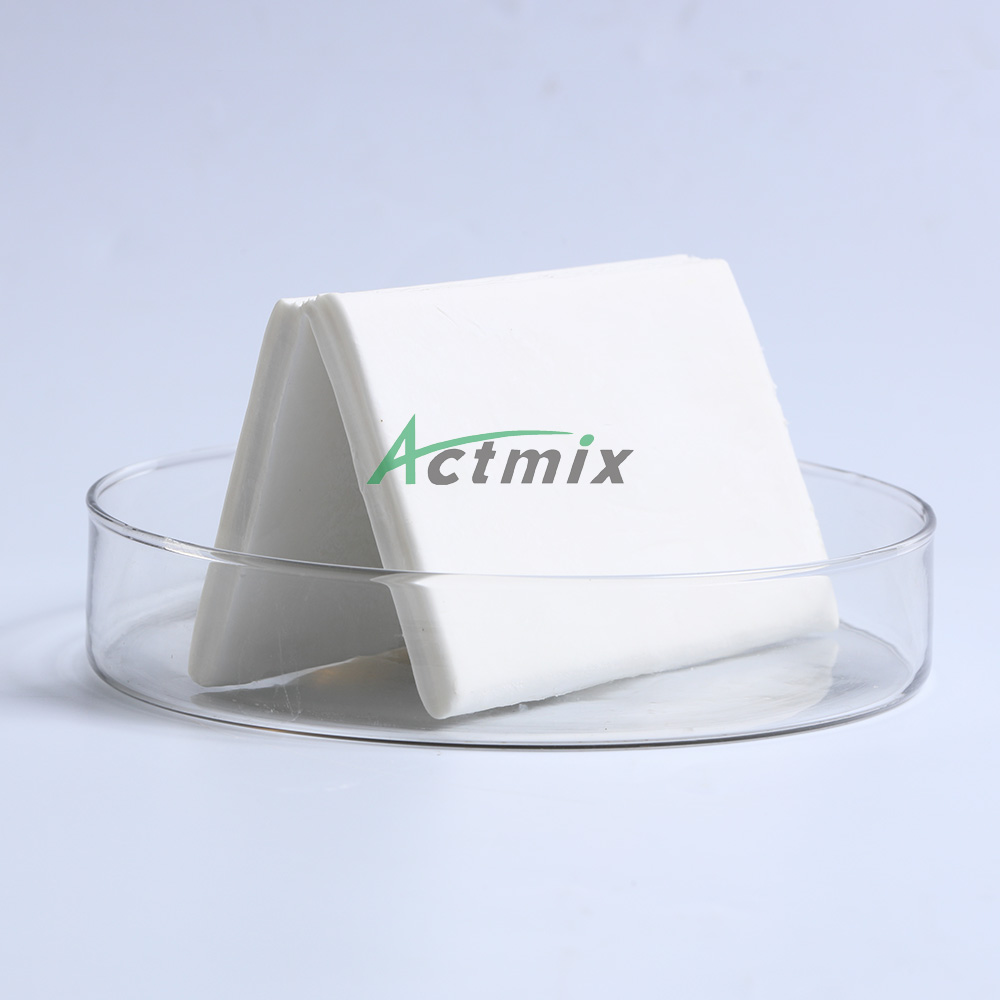
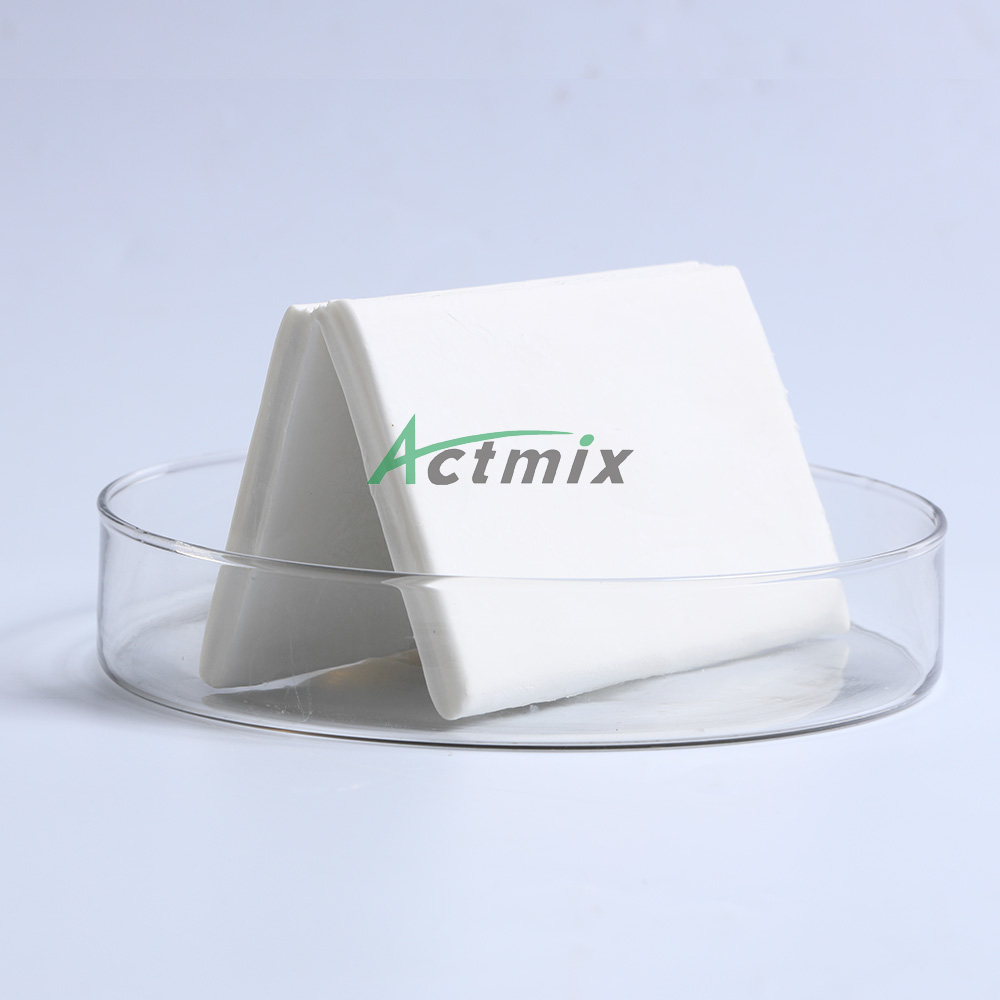
Pre-dispersed rubber chemicals are specialized additives where active ingredients are uniformly distributed within a polymer binder matrix. This masterbatch technology eliminates the mess and inconsistency of traditional powder additives, ensuring precise dosing and superior dispersion in rubber compounds.
Unlike conventional rubber chemicals that require manual weighing and mixing, pre-dispersed forms offer high stability, high dispersibility, and high homogeneity. These benefits translate directly to improved production efficiency, reduced waste, and consistent product quality for manufacturers of automotive seals, hoses, tires, and other rubber products.
Ningbo Actmix operates a modern, intelligent digital factory with an annual production capacity of 25,000 metric tons. This large-scale manufacturing capability ensures reliable supply chain stability for global buyers.
The facility is certified under IATF16949, ISO14001, and ISO45001 standards, meeting the rigorous requirements of international automotive and industrial clients. Hundreds of pre-dispersed rubber chemical formulations are available, from standard accelerators to custom polymer-bound masterbatches.
When sourcing pre-dispersed rubber chemicals, evaluate these critical factors:
Use this comprehensive checklist when evaluating pre-dispersed rubber chemical suppliers to minimize procurement risk and ensure long-term partnership success.
When selecting a supplier for plate form polymer-bound rubber additives or slab form pre-dispersed chemicals, prioritize manufacturers with proven track records in international markets and comprehensive certification portfolios.
Choose suppliers with annual capacity exceeding 20,000 metric tons to ensure supply security during peak demand periods and accommodate large-volume orders without delays.
Verify that suppliers hold IATF16949 for automotive applications, plus ISO14001 and ISO45001 for environmental and safety management. These certifications demonstrate systematic quality control.
Prioritize exporters with established presence in Europe, North America, Southeast Asia, and Middle East markets. Proven international experience indicates compliance with diverse regulatory requirements.
Pre-dispersed rubber chemicals and polymer-bound additives serve critical functions across multiple high-end rubber industries. Understanding application-specific requirements helps optimize product selection and performance.
EPDM rubber weatherstrips and sealing profiles benefit from pre-dispersed accelerators that ensure uniform curing and excellent weather resistance. The plate form format enables precise dosing in automated mixing processes.
Railway vibration dampers, bushings, and seals require rubber compounds with exceptional aging resistance. Pre-dispersed antioxidants and anti-ozonants in masterbatch form deliver consistent performance over decades of service.
High-pressure hydraulic hoses and conveyor belts demand rubber compounds with superior tear strength and fatigue resistance. Polymer-bound rubber chemicals improve processability while maintaining mechanical properties.
Automotive and industrial shock absorber components require precise viscoelastic properties. Pre-dispersed rubber chemicals enable tight tolerance control in compound formulation for consistent damping characteristics.
Tire sidewalls and treads utilize pre-dispersed processing aids and coupling agents to enhance filler dispersion, reduce energy loss, and improve wet grip performance. Masterbatch format simplifies ingredient handling.
Bridge bearings, expansion joints, and waterproofing membranes rely on durable EPDM and butyl rubber compounds. Pre-dispersed stabilizers extend service life in harsh environmental conditions.
Procurement professionals frequently encounter these challenges when sourcing plate form polymer-bound rubber additives. Understanding these issues helps prevent costly mistakes and supply chain disruptions.
The Problem: Poorly manufactured pre-dispersed chemicals show uneven active ingredient distribution, leading to batch-to-batch variability in rubber properties.
The Solution: Request dispersibility test reports and conduct incoming quality checks. Choose suppliers with digital factory controls and standardized production processes.
The Problem: Using polymer binders incompatible with your base rubber causes poor adhesion, phase separation, and compromised final product performance.
The Solution: Work with suppliers offering customization services. Specify your rubber type and request binder formulations optimized for compatibility.
The Problem: Pre-dispersed rubber chemicals absorb moisture during storage, affecting flowability and causing defects in rubber processing.
The Solution: Implement proper storage protocols with humidity control. Verify packaging integrity and shelf life specifications before ordering.
The Problem: Importing rubber chemicals without verifying REACH, RoHS, or PAHs compliance risks customs detention and product recalls.
The Solution: Require complete regulatory documentation including SVHC declarations and substance-by-substance disclosure. Partner with suppliers experienced in your target market regulations.
Slab form pre-dispersed rubber chemicals typically come in larger block formats requiring size reduction before use, while plate form polymer-bound rubber additives are manufactured as thin, uniform sheets that feed more easily into automated mixing systems. Both formats offer superior dispersion compared to powder additives, but plate form provides better handling efficiency in high-volume production environments.
Pre-dispersed rubber chemicals eliminate manual weighing and dust generation, reducing operator exposure to hazardous substances. The uniform composition ensures consistent dosing accuracy, minimizing formulation errors and scrap rates. Manufacturers report 15-30% improvement in mixing efficiency and significant reductions in quality rejection rates when switching from powder to pre-dispersed formats.
Yes, leading manufacturers like Ningbo Actmix offer comprehensive customization services. They can formulate masterbatches with specific active content percentages (typically 20-80%) and select polymer binders compatible with your base rubber compound. Customization allows optimization for particular applications such as automotive sealing strips, EPDM profiles, or specialized rubber goods.
Essential certifications include IATF16949 for automotive supply chain quality management, ISO14001 for environmental management, and ISO45001 for occupational health and safety. Additionally, verify product-specific compliance with REACH (Europe), RoHS (restricted substances), and PAHs-free declarations. Request current certificate copies and verify authenticity through the issuing bodies.
Store pre-dispersed rubber chemicals in a cool, dry environment with temperature below 30°C and relative humidity under 70%. Keep products in original sealed packaging until use to prevent moisture absorption. Shelf life typically ranges from 12-24 months depending on the formulation. Avoid direct sunlight and protect from physical damage to maintain product integrity.
Minimum order quantities vary by supplier and customization level. Standard products may have MOQs starting from 1-5 metric tons, while fully customized formulations might require higher initial volumes to justify production setup. Discuss your volume requirements with suppliers early in the sourcing process to negotiate favorable terms and establish sustainable supply agreements.
About Us
Related Products List
Contact Us

Send Inquiry
Privacy statement: Your privacy is very important to Us. Our company promises not to disclose your personal information to any external company with out your explicit permission.
Fill in more information so that we can get in touch with you faster
Privacy statement: Your privacy is very important to Us. Our company promises not to disclose your personal information to any external company with out your explicit permission.