

Please Leave Us A Message
Privacy statement: Your privacy is very important to Us. Our company promises not to disclose your personal information to any external company with out your explicit permission.


Vulcanization retarders are essential chemical auxiliary agents designed to control the curing process of synthetic rubber compounds. They function by delaying the onset of cross-linking during mixing and processing, preventing premature scorching while ensuring complete vulcanization at elevated temperatures.
For manufacturers producing high-end automotive sealing strips, rail traffic components, and industrial hoses, precise control over the vulcanization timeline is critical. These retarders allow operators to maintain compound stability during extended processing times without sacrificing final material properties.
Key Benefit: By optimizing the processing window, these retarders reduce scrap rates and energy consumption while maintaining consistent product quality across production batches.
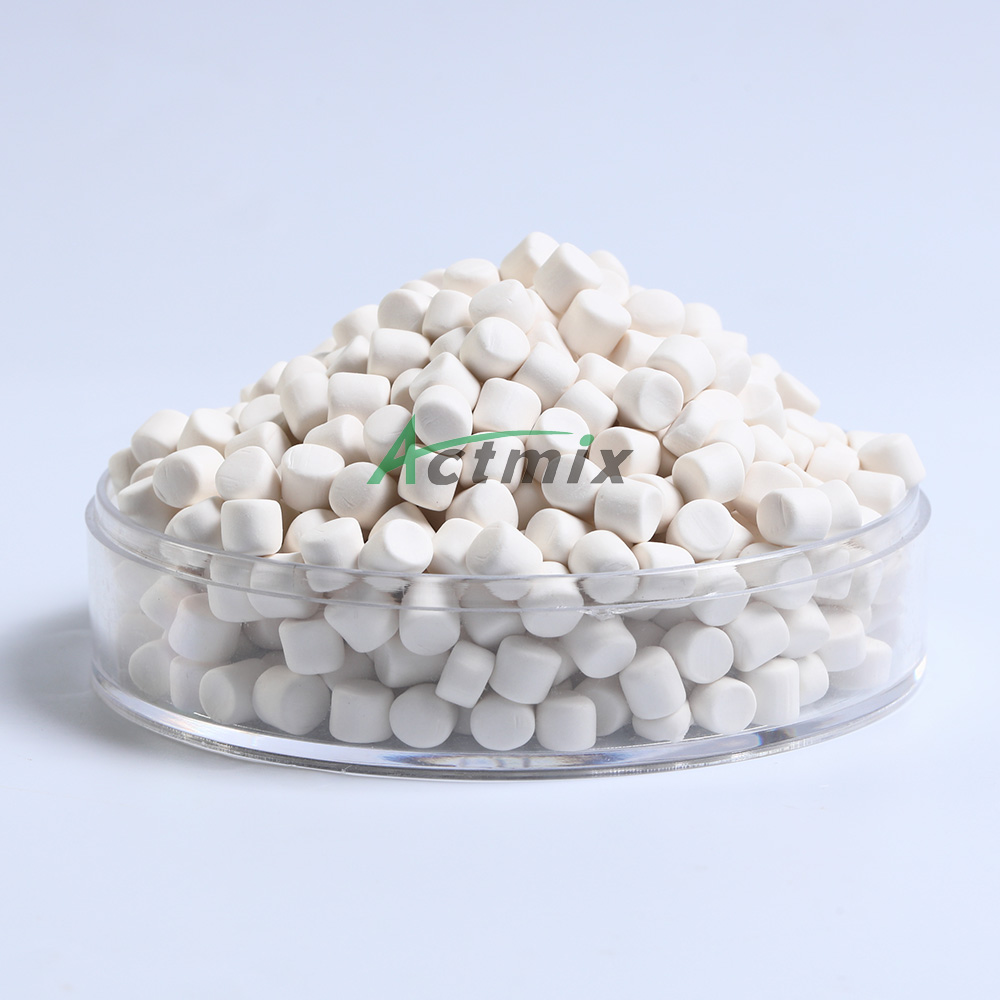
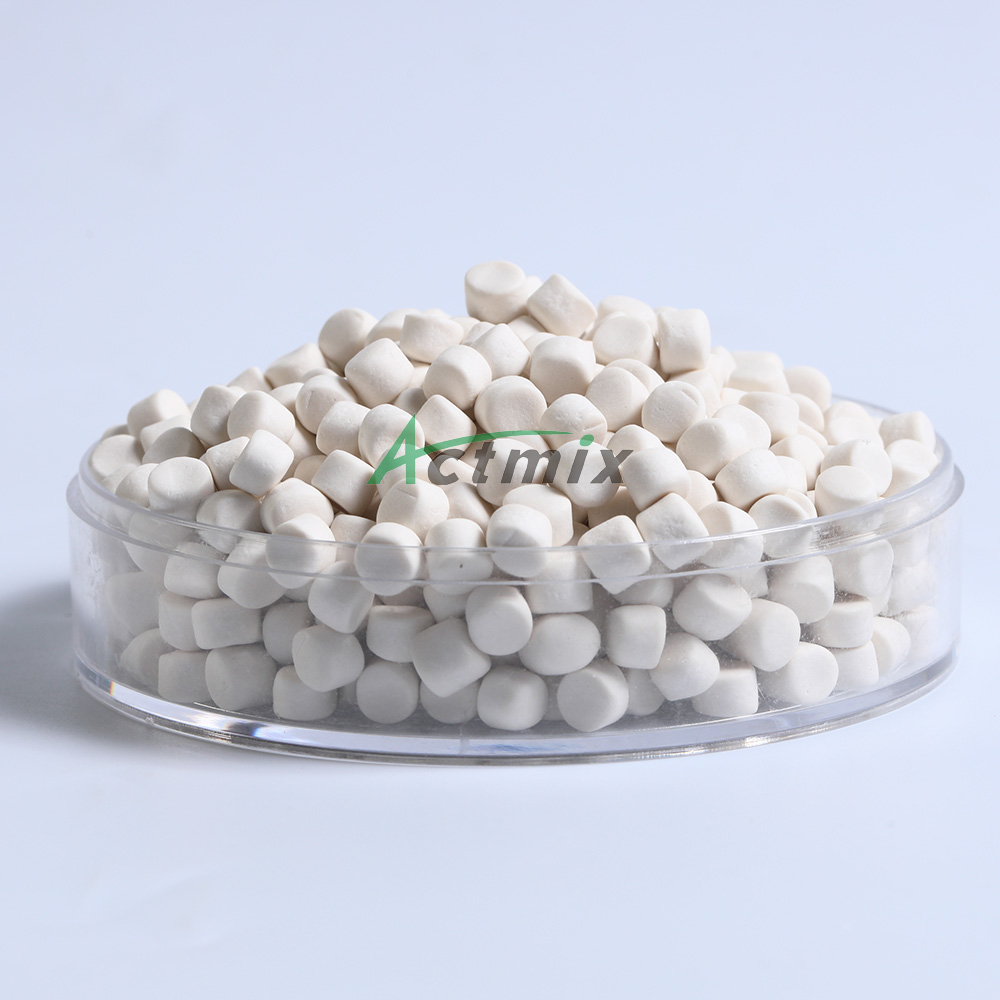
Ningbo Actmix Rubber Chemicals operates a modern, intelligent digital factory with an annual production capacity of 25,000 metric tons. This scale ensures reliable supply chain continuity for global buyers requiring consistent volumes of vulcanization retarders.
Why It Matters: Our triple certification demonstrates commitment to international standards in quality management, environmental responsibility, and occupational health. Buyers benefit from reduced audit requirements and assured compliance with global regulatory frameworks.
Selecting appropriate vulcanization retarders requires careful consideration of your specific rubber compound formulation, processing equipment capabilities, and end-product performance requirements. The ideal retarder balances extended safety time with efficient cure activation.
When evaluating vulcanization retarders for synthetic rubber applications, prioritize suppliers who offer comprehensive technical support and customized masterbatch solutions. Actmix provides tailored formulations with different active content levels and polymer binders to match your exact specifications.
Pro Tip: Request sample testing with your specific compound formulation before committing to large orders. This validates compatibility and optimizes dosage rates for maximum efficiency.
Verify the supplier's annual output capability matches your volume requirements. Look for manufacturers with established facilities like Actmix's 25,000 MT/year capacity.
Ensure the manufacturer holds relevant international certifications including IATF 16949, ISO 14001, and ISO 45001 for comprehensive quality assurance.
Choose suppliers offering diverse pre-dispersed rubber chemicals and additives. A broad portfolio simplifies procurement and reduces vendor management complexity.
Assess the availability of engineering support for compound optimization, troubleshooting, and application-specific guidance throughout your procurement process.
Confirm the supplier has experience exporting to your region with established logistics networks covering Europe, Americas, Southeast Asia, and Middle East markets.
Evaluate the manufacturer's capability to provide customized masterbatch formulations with specific active content percentages and polymer binder systems.
Our vulcanization retarders serve diverse sectors requiring high-performance synthetic rubber compounds. From automotive components to infrastructure projects, these chemical auxiliaries enable precise processing control across multiple industries.
EPDM sealing strips for doors, windows, and trunk lids require consistent vulcanization control for optimal weather resistance.
Critical components for trains and metro systems demand reliable rubber compounds meeting stringent safety standards.
High-pressure hose applications benefit from enhanced dispersibility and homogeneity in rubber formulations.
Vibration damping components require precise control over cross-linking density for optimal performance longevity.
As a leading manufacturer established in 2009, Ningbo Actmix Rubber Chemicals combines decades of expertise with cutting-edge digital manufacturing capabilities. Our position in Ningbo Jiangbei High-tech Park provides strategic advantages for global distribution.
Partnering with Actmix delivers more than just products—it provides a comprehensive solution for your rubber chemical needs. Our team works closely with procurement teams to optimize formulations, reduce costs, and streamline supply chains.
Competitive Edge: Access to our extensive product portfolio and technical expertise gives you flexibility in compound design while maintaining consistent quality across all raw material sources.
Pre-dispersed retarders come formulated with a polymer binder, providing superior dispersibility and homogeneity compared to standard powder forms. This eliminates manual handling issues, reduces dust generation, and ensures consistent dosing accuracy in your production process.
Our intelligent digital factory implements rigorous quality control protocols at every production stage. With IATF 16949, ISO 14001, and ISO 45001 certifications, we maintain traceability and consistency that meets international automotive and industrial standards.
Yes, Actmix specializes in custom masterbatch development with adjustable active content levels and polymer binder systems. Our technical team collaborates directly with your engineers to develop formulations optimized for your specific synthetic rubber compounds and processing conditions.
We have established export operations covering Europe, North and South America, Southeast Asia, and the Middle East. Our experienced logistics team manages complex international shipping requirements, ensuring timely delivery and proper documentation for customs clearance.
With our 25,000 MT annual production capacity, we maintain robust inventory levels for standard formulations. For custom orders or large-volume requirements, lead times vary based on specification complexity. Contact our sales team for current availability and scheduling information.
About Us
Related Products List
Contact Us

Send Inquiry
Privacy statement: Your privacy is very important to Us. Our company promises not to disclose your personal information to any external company with out your explicit permission.
Fill in more information so that we can get in touch with you faster
Privacy statement: Your privacy is very important to Us. Our company promises not to disclose your personal information to any external company with out your explicit permission.