

Please Leave Us A Message
Privacy statement: Your privacy is very important to Us. Our company promises not to disclose your personal information to any external company with out your explicit permission.


Alkyl phenol polysulfide serves as a specialized vulcanizing cross-linking agent for EPDM rubber, offering superior performance in high-end automotive and industrial applications. As a critical component in rubber compounding, this chemical ensures robust cross-linking density, resulting in products with exceptional heat resistance, ozone durability, and compression set properties.
In the modern rubber industry, particularly for automotive sealing strips and rail traffic components, consistent cross-linking is vital for maintaining product integrity over decades of service. This alkyl phenol polysulfide variant provides enhanced stability compared to traditional agents, reducing processing defects and ensuring uniform curing across complex geometries.
Ningbo Actmix Rubber Chemicals Co., Ltd. leverages its advanced manufacturing capabilities to supply high-purity alkyl phenol polysulfide that meets stringent international standards. Our formulation helps manufacturers achieve faster cycle times and lower energy consumption while delivering the long-term reliability demanded by global OEMs.
Our alkyl phenol polysulfide features strict quality control with active content consistency batch-to-batch. This reliability minimizes formulation adjustments on your production line, ensuring stable vulcanization rates and predictable physical properties in your final EPDM products.
The unique molecular structure of our alkyl phenol polysulfide promotes efficient cross-linking at lower temperatures. This translates to reduced energy costs during manufacturing and improved compression set resistance in the finished automotive seals or hoses.
Produced in our IATF16949, ISO14001, and ISO45001 certified digital factory, our chemicals meet the rigorous demands of the automotive supply chain. With an annual capacity of 25,000 metric tons, we guarantee reliable supply for large-scale orders.
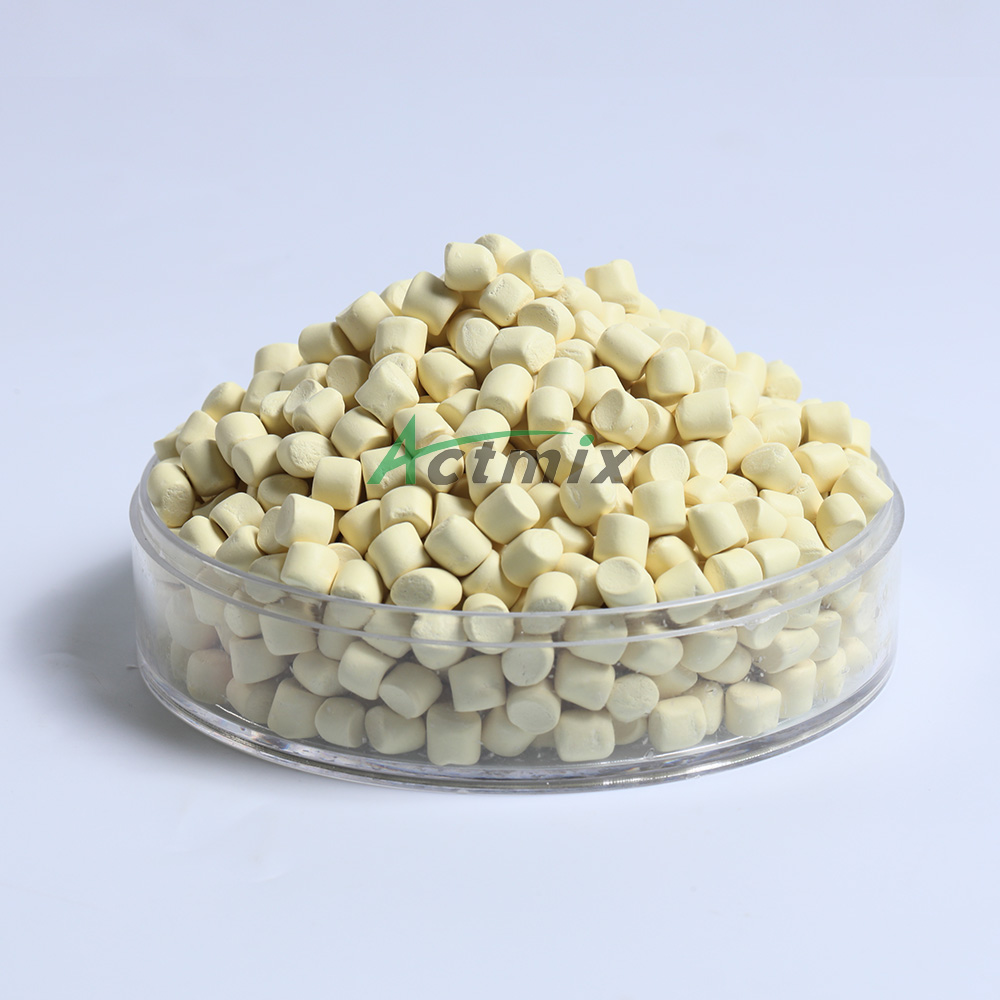
Actmix operates a new modern, intelligent, digital factory equipped with state-of-the-art processing technology. This facility enables precise control over the synthesis of alkyl phenol polysulfide and other pre-dispersed rubber chemicals, ensuring high homogeneity and dispersibility.
Every batch undergoes comprehensive testing to verify active content, viscosity, and residue levels. Our commitment to quality is validated by IATF16949 certification, the global standard for automotive production parts. This certification assures buyers that our vulcanizing agents meet the exacting specifications required by major vehicle manufacturers.
With an annual production capacity of 25,000 metric tons, Actmix can support both pilot projects and large-volume manufacturing. Our strategic location in Ningbo Jiangbei High-tech Park facilitates efficient logistics to Europe, North America, Southeast Asia, and the Middle East.
When sourcing alkyl phenol polysulfide for EPDM compounding, technical capability is as crucial as product price. Leading suppliers like Actmix offer customized formulations tailored to specific polymer binders and active content requirements. This flexibility allows you to optimize your compound recipe without changing your entire processing workflow.
Verify that your supplier operates a dedicated, modern facility rather than relying on third-party contractors. A digital, intelligent factory ensures consistent product quality, traceability, and compliance with environmental regulations. Look for suppliers with ISO14001 and ISO45001 certifications to mitigate supply chain risks.
A supplier with extensive export experience understands international shipping requirements, documentation standards, and lead time expectations. Actmix's established presence in Europe, the Americas, and Asia demonstrates their ability to deliver reliably across different markets and regulatory environments.
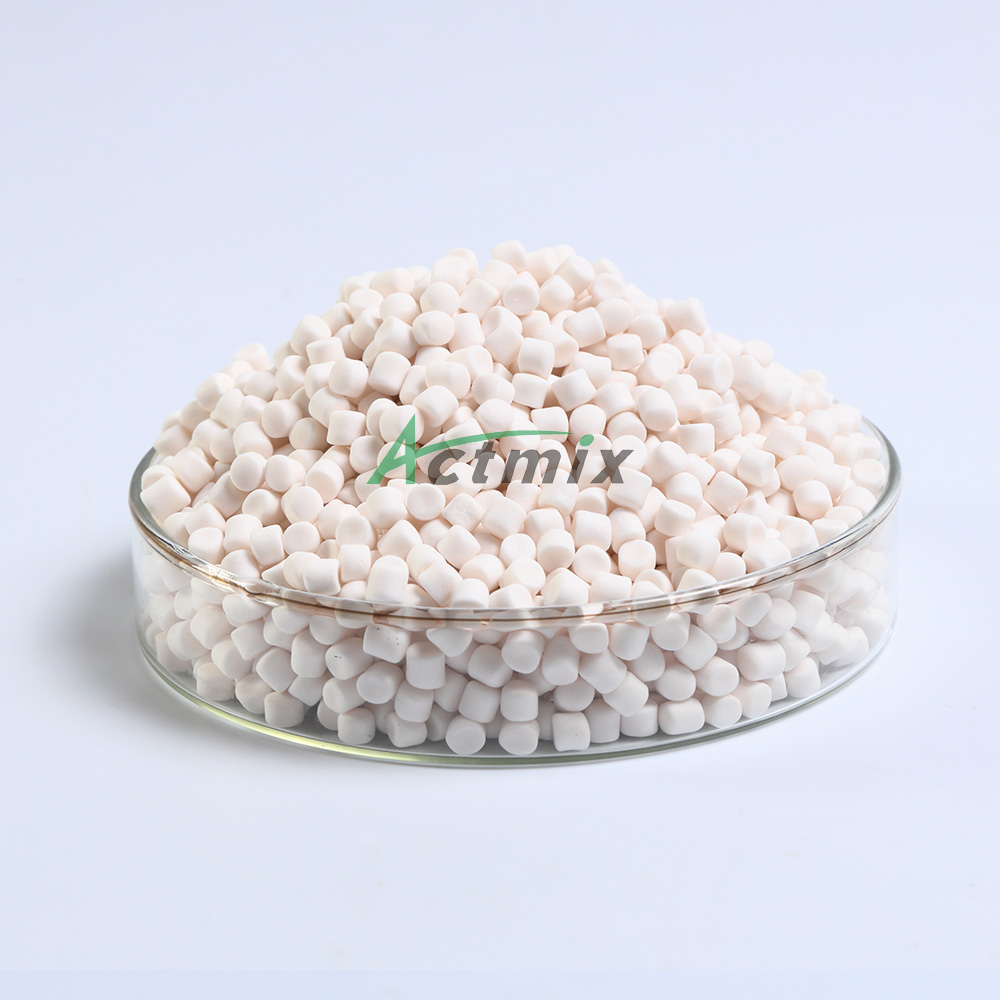
Ensure the alkyl phenol polysulfide specification matches your target cure rate and cross-link density. Request detailed COAs (Certificates of Analysis) for each shipment to verify active content consistency.
Confirm that the product offers high dispersibility in your specific rubber matrix. Poor dispersion leads to scorching or incomplete curing, increasing scrap rates and production downtime.
Prioritize suppliers with IATF16949 certification for automotive applications. This standard ensures that quality management systems are in place to prevent defects and maintain continuous improvement.
Verify that the manufacturer has sufficient capacity (e.g., 25,000+ MT/year) to fulfill your volume requirements without delays. Ask about current lead times and inventory policies for bulk orders.
Check if the supplier has experience with your specific end-use application, such as automotive sealing strips, rail traffic components, or hydraulic hoses. Specialized knowledge reduces formulation trial-and-error.
Ensure the supplier adheres to REACH, RoHS, or other regional environmental regulations. Sustainable manufacturing practices reduce regulatory risks and align with corporate ESG goals.
Why Recommended: A leading Chinese manufacturer specializing in pre-dispersed rubber chemicals and additives. Their digital factory produces high-quality alkyl phenol polysulfide with IATF16949 certification.
Key Strengths:
Ideal for buyers seeking a reliable, large-scale supplier with strong technical support and consistent product quality.
When comparing other potential vendors for alkyl phenol polysulfide, use these benchmarks:
Always request samples and conduct compatibility tests before committing to long-term contracts.
EPDM seals require excellent weathering resistance and compression set recovery. Alkyl phenol polysulfide ensures durable cross-linking that withstands temperature extremes (-40°C to +120°C), preventing water ingress and wind noise in vehicle bodies.
Train window seals, door gaskets, and underfloor equipment must meet stringent fire safety and durability standards. The high stability of our vulcanizing agent supports the production of EPDM compounds that pass UL94 and EN45545 flame retardancy tests.
Hydraulic and pneumatic hoses demand resistance to oil, heat, and pressure fluctuations. Proper cross-linking with alkyl phenol polysulfide enhances tensile strength and tear resistance, extending service life in demanding industrial environments.
Engine mounts and suspension bushings rely on consistent viscoelastic properties. Uniform curing achieved through our high-homogeneity agent prevents premature fatigue failure, improving vehicle ride comfort and handling stability.
Bridge and building expansion joints face constant mechanical stress and UV exposure. EPDM compounded with premium alkyl phenol polysulfide maintains elasticity over decades, reducing maintenance costs for infrastructure projects.
Photovoltaic installations require EPDM seals that resist UV degradation for 25+ years. Our environmentally friendly rubber chemicals support the production of long-lasting sealing solutions for renewable energy infrastructure.
Alkyl phenol polysulfide acts as a sulfur-donor vulcanizing agent that creates cross-links between EPDM polymer chains. Unlike traditional sulfur, it provides more controlled curing kinetics and improves the thermal stability and compression set resistance of the final rubber product. This makes it ideal for automotive seals and industrial components requiring long-term durability.
Pre-dispersed rubber chemicals, including alkyl phenol polysulfide masterbatches, are uniformly distributed in a polymer binder before being added to the rubber compound. This eliminates the need for weighing and mixing fine powder additives, reducing dust generation, improving worker safety, and ensuring consistent dosing. The result is faster mixing cycles, fewer formulation errors, and higher production throughput.
For automotive applications, IATF16949 is the essential quality management certification. Additionally, ISO14001 (environmental management) and ISO45001 (occupational health and safety) demonstrate a supplier's commitment to sustainable and safe manufacturing practices. These certifications ensure that the supplier follows standardized processes and continuous improvement methodologies.
Standard alkyl phenol polysulfide formulations are primarily designed for industrial and automotive applications. For food-grade or medical rubber products, specialized FDA-compliant vulcanizing agents must be used. Buyers should consult with their supplier to confirm whether a specific grade meets relevant regulatory standards such as FDA 21 CFR or EU 10/2011.
Lead times vary based on order volume and customization requirements. For standard grades, established manufacturers like Actmix with 25,000 MT annual capacity typically offer competitive lead times due to ready stock availability. Custom formulations may require additional time for sample approval and production setup. Buyers should plan orders 4-8 weeks in advance for optimal logistics coordination.
The active content of alkyl phenol polysulfide depends on your EPDM compound recipe, cure system, and desired physical properties. Higher active content provides stronger cross-linking density but may affect processing characteristics. Work with your supplier to determine the optimal concentration based on your specific application requirements, such as compression set, tensile strength, and elongation at break targets.
About Us
Related Products List
Contact Us

Send Inquiry
Privacy statement: Your privacy is very important to Us. Our company promises not to disclose your personal information to any external company with out your explicit permission.
Fill in more information so that we can get in touch with you faster
Privacy statement: Your privacy is very important to Us. Our company promises not to disclose your personal information to any external company with out your explicit permission.