

Please Leave Us A Message
Privacy statement: Your privacy is very important to Us. Our company promises not to disclose your personal information to any external company with out your explicit permission.


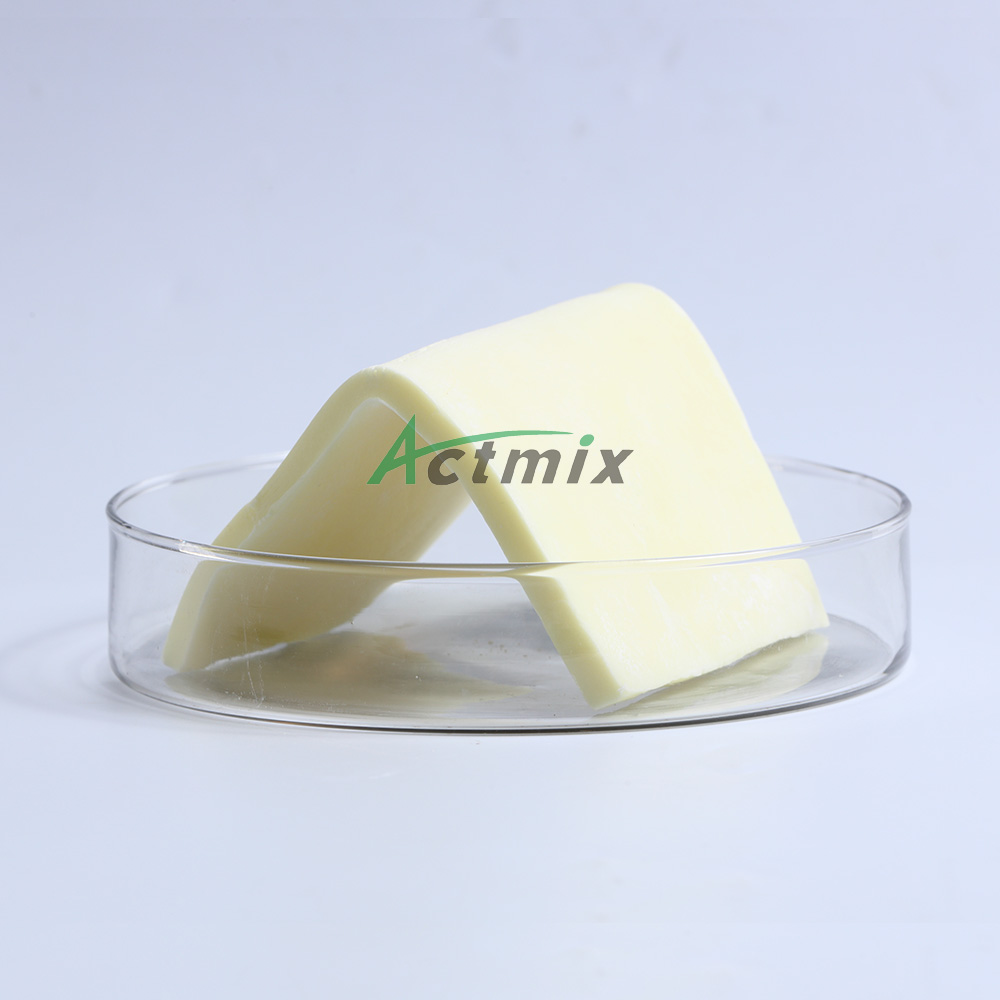
A rubber foaming agent is a specialized chemical additive designed to generate gas during the vulcanization process, creating a uniform cellular structure within the rubber matrix. This transformation turns dense rubber into lightweight, flexible foam materials essential for modern manufacturing.
For procurement buyers, choosing the right foaming agent directly impacts production efficiency and final product performance. High-quality agents ensure consistent cell size, optimal density reduction, and excellent mechanical properties without compromising material strength.
Ningbo Actmix Rubber Chemicals Co., Ltd. specializes in pre-dispersed rubber chemicals that include advanced foaming solutions. Our products are engineered for high stability and dispersibility, ensuring reliable performance across automotive seals, industrial hoses, and consumer goods applications.
Our state-of-the-art digital factory in Ningbo Jiangbei High-tech Park ensures every batch of foaming agent meets international quality standards. With an annual production capacity of 25,000 metric tons, we support large-scale procurement needs with consistent supply reliability.
Each foaming agent undergoes rigorous testing for active content, particle size distribution, and thermal decomposition characteristics. This ensures predictable processing behavior and consistent foam density in your final products, reducing waste and improving yield rates.
Selecting the optimal foaming agent requires understanding your specific rubber compound, processing equipment, and end-use requirements. Key factors include decomposition temperature compatibility, gas generation rate, and residue characteristics.
The agent must decompose at the correct stage of vulcanization. Premature or delayed gas release causes uneven cell structures, weak spots, and dimensional instability in finished parts.
Pre-dispersed foaming agents offer superior homogeneity compared to traditional powder forms. Better dispersion means fewer defects, reduced mixing time, and more consistent foam density across production batches.
Modern foaming agents should meet environmental regulations including RoHS and REACH restrictions. Non-toxic decomposition products protect worker health and ensure compliance with global market requirements.
Use this comprehensive checklist when evaluating foaming agent suppliers and products. Each criterion helps minimize procurement risk and ensures long-term supply chain reliability.
Understanding typical challenges with rubber foaming agents helps prevent costly production disruptions. Below are frequent issues encountered during procurement and processing, along with practical solutions.
Problem: Inconsistent foam density causing weak spots and dimensional variation.
Solution: Switch to pre-dispersed foaming agents for improved homogeneity. Ensure proper mixing sequence and verify dispersion equipment capability.
Problem: Cratering, pinholes, or rough surface finish on molded foam products.
Solution: Adjust vulcanization temperature profile to match agent decomposition rate. Consider using secondary blowing agents for smoother surface release.
Problem: Premature foaming during mixing or storage leads to material waste.
Solution: Select foaming agents with appropriate activation temperatures. Implement cold mixing protocols and control storage environment temperature below 30°C.
Problem: Powder form agents clump during mixing, creating agglomerates that disrupt foam formation.
Solution: Transition to masterbatch-formatted foaming agents. Pre-dispersed formats eliminate agglomeration risks and reduce mixing time by up to 40%.
Problem: Decomposition residues affect product appearance or cause discoloration.
Solution: Choose low-residue foaming agents specifically formulated for light-colored compounds. Verify decomposition byproducts are compatible with your rubber system.
Problem: Different production lots show varying foam densities and mechanical properties.
Solution: Work with suppliers providing strict quality control and batch consistency guarantees. Request incoming material testing and establish acceptance criteria.
When sourcing foaming agents for rubber compounding, prioritize manufacturers with proven track records in pre-dispersed technologies and international certifications. The following recommendations focus on suppliers capable of meeting demanding B2B requirements.
Get answers to common procurement questions about rubber foaming agents, from technical specifications to supply chain considerations.
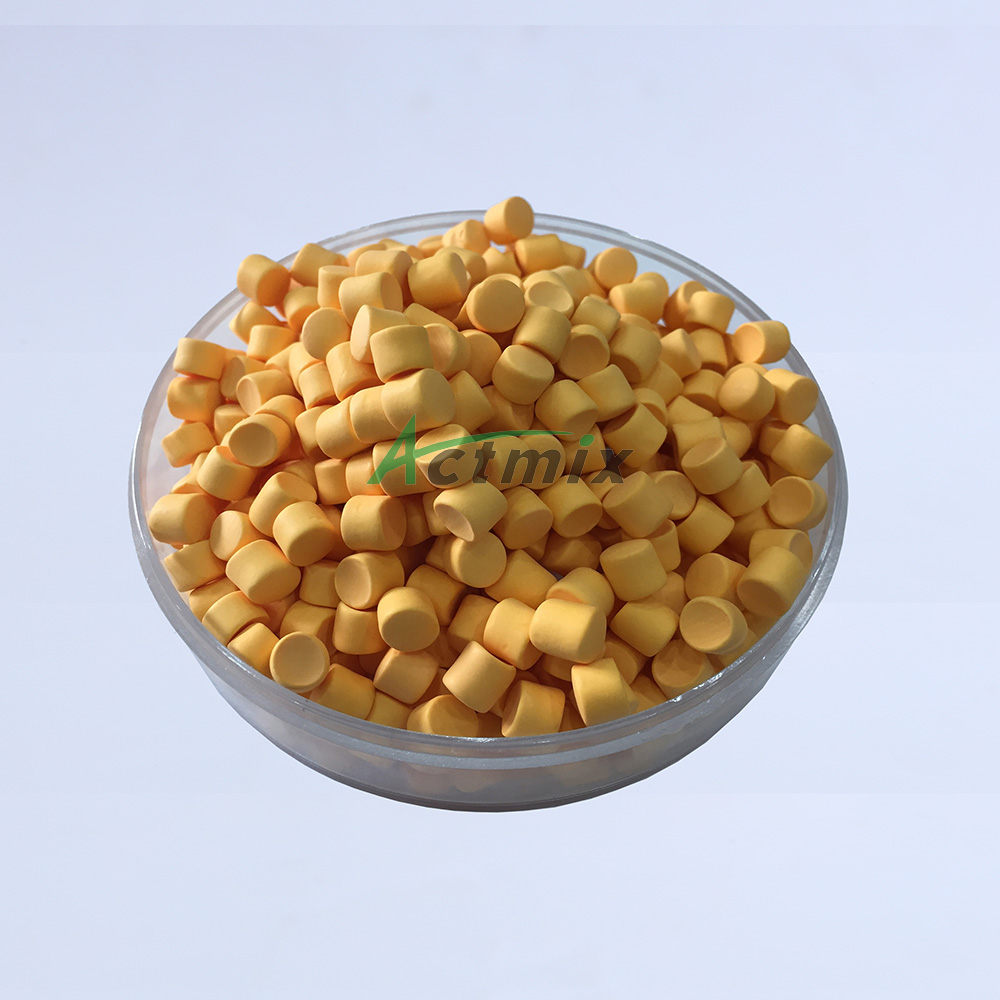
Pre-dispersed foaming agents are compounded with a polymer binder and extruded into pellets or flakes, then ground to specific particle sizes. This format offers superior dispersibility, reduced dust, better handling safety, and more consistent foam structure compared to traditional powder forms. For buyers, pre-dispersed agents reduce mixing time, minimize quality variability, and lower overall processing costs despite potentially higher per-unit pricing.
Dosage depends on target foam density, rubber type, and desired cell structure. Typically, foaming agents range from 2-8 phr (parts per hundred rubber). Consult with your supplier's technical team to calculate optimal dosage based on your specific formulation. They can provide trial samples and processing guidelines to fine-tune the amount for your equipment and product requirements.
Yes, foaming agents are widely used in EPDM rubber compounds for automotive sealing strips, window gaskets, and weatherproofing applications. Pre-dispersed foaming masterbatches are particularly suitable for EPDM due to their compatibility with various polymer binders. Actmix specifically develops foaming solutions optimized for EPDM auto sealing strips, ensuring excellent flexibility, durability, and weather resistance.
Store foaming agents in a cool, dry place away from direct sunlight and heat sources. Ideal storage temperature is below 30°C with relative humidity under 70%. Keep packages sealed when not in use to prevent moisture absorption. Properly stored, most foaming agents have a shelf life of 12-24 months from production date. Always check the manufacturer's recommended storage guidelines for specific products.
For automotive applications, IATF 16949 certification is essential. ISO 9001 demonstrates quality management capability, while ISO 14001 indicates environmental responsibility. Additionally, request material compliance documentation such as RoHS, REACH, and Prop 65 declarations to ensure regulatory compliance in your target markets. Actmix holds IATF 16949, ISO 14001, and ISO 45001 certifications.
Actmix operates a modern, intelligent, digital factory with automated production lines and real-time quality monitoring systems. Each batch undergoes rigorous testing for active content, particle size distribution, and thermal properties. The company maintains detailed traceability records and provides Certificates of Analysis with every shipment, ensuring you receive consistent, reliable foaming agents for your rubber compounding operations.
About Us
Related Products List
Contact Us

Send Inquiry
Privacy statement: Your privacy is very important to Us. Our company promises not to disclose your personal information to any external company with out your explicit permission.
Fill in more information so that we can get in touch with you faster
Privacy statement: Your privacy is very important to Us. Our company promises not to disclose your personal information to any external company with out your explicit permission.